Not always easy. Not always convenient.
Homeschooling in bush Alaska is challenging but provides the ultimate in extraordinaire.
I have a confession. I did not want to homeschool my kids. When they were infants, then toddlers, I dreamed of them going off to kindergarten at the local school, me kissing them lightly on their cheeks and patting them on their tiny backs as they waltzed into a cute, vibrantly color-filled classroom. Then I would go off to work!
When my daughter reached second grade, it became evident changes were needed. I began to get daily gnawing’s in my gut and “knowing’s” from the Lord that my dream of going back to work would have to wait a bit longer. For a bunch of reasons, which I won’t get into now, my husband and I realized homeschooling was our best option.
Born was a journey and adventure of a lifetime. What began as dreaded days of “What on earth am I doing” as well as “I have no idea where to start” has now turned into the most joyous, blessed time with my children I could possibly imagine. Yes, there have been tears and frustrations but the contentment we’ve developed in the home while learning is cherished treasure.
Living in McGrath
We live about 250 miles northwest of Anchorage and are in the middle of nowhere. McGrath is “off the road system”, which means you cannot drive here. Access is by airplane. Our community has a population of about 300 people, everybody knows everybody, and we all wave to each other while driving down the road. Temperatures here in interior Alaska dip to below -55 degrees F in winter and can soar to the 80’s in the hottest part of summer.
Things are expensive. Gas now costs $8.50 per gallon, a bag of chips at our one small store runs about $10, ice cream is $16.49 a half gallon, and milk is $16 per gallon (it’s been this price for years…even before COVID and recent inflation). A plane ticket into Anchorage costs $450 roundtrip. A cord of wood was selling at $400/cord unsplit last winter. Electricity is about 11 times the national average.
Challenges of homeschooling in bush Alaska
Unique challenges exist in homeschooling in bush Alaska as well. We have fewer resources available to us for homeschooling verses families on the road system and in “typical” settings. With such a small population we do not have enough students for sports teams. We have satellite internet that is slow, limited and spotty. At times online classes are missed because our internet is down.
There are no trampoline parks to bounce in, no pools to splash in, we lack face-to-face tutor options. Fewer club options exist, we have no horses, and no big gyms. Doing PE exercise time in temperatures that are 50 degrees below zero is challenging, and I would not recommend it. Things snap, break, and don’t work when it’s that cold. I’m talking about hair, zippers, straps, cars, sleds, and things like skis. Moods can snap and break with the long dark winter days as well. It’s not always easy.
Right about now, you may be thinking to yourself, “Why would anyone want to live there?” Sparce internet? Not for me! Sixteen dollars for a gallon of milk! WHAT! No Trader Joe’s? Forget it! How do they live without Costco? (I do struggle with this one). No doctors. Amenities are few.
But if you love wilderness, remote places, wildlife, fishing, hunting, and semi-subsistence living like we do, it is a mecca.
The Ultimate in Extraordinaire- perks of homeschooling in bush Alaska
A nature oasis is right outside our door. We grow an abundance of healthy fresh food in the summer and learn firsthand where our food comes from. We fish, hunt, boat, and sit in nature and listen. Life skills are formed. Lessons learned. The value of life instilled. Appreciation for God’s beauty, provision and abundance nurtured.
We fish for salmon and put up a winter’s worth of fish fillets, all the while learning about fish ecology, riparian habitats, fish management, politics of Alaska’s fishery, cultural value to local communities, and traditional Native Alaska knowledge.
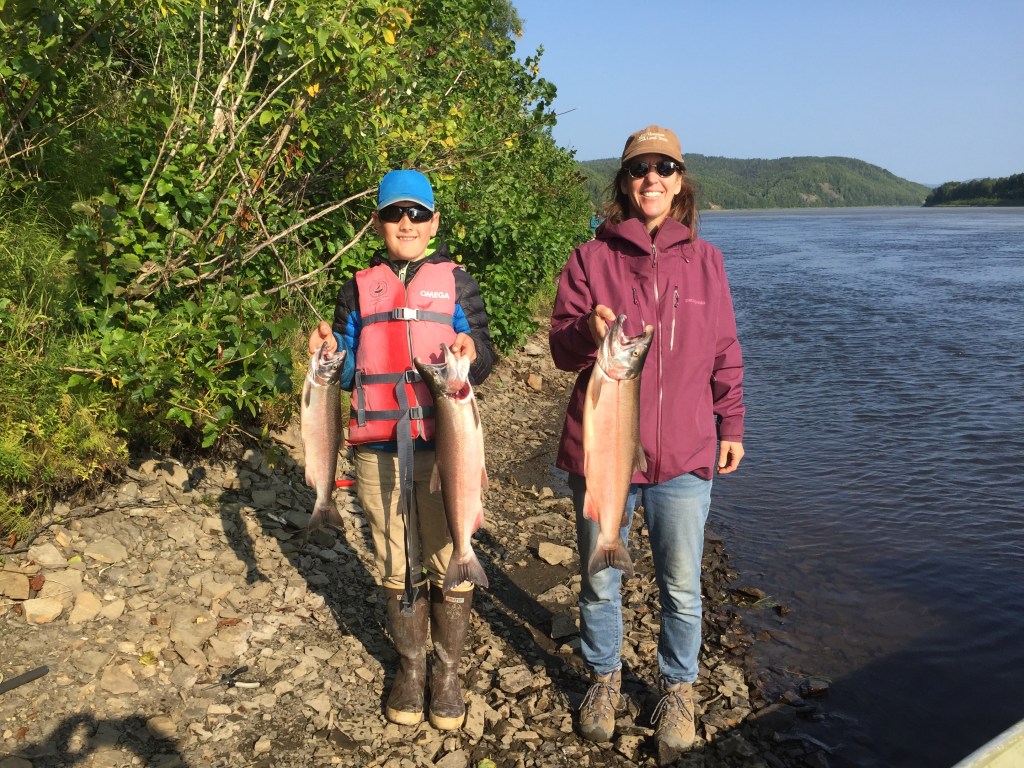
Our moose hunting season runs from September 1-25. We hunt each year and have been fortunate to get one, which supplies a plethora of lean meat that lasts us a full year. While butchering the moose, we learn about mammal anatomy and physiology and dissection techniques of a 1,500-pound moose.

Last month my son and I went flying and studied fire ecology from our Piper PA-18 Super Cub. This area experienced one of the busiest wildfire seasons on record. What better way to learn about how fire shapes the landscape then to go fly and get an aerial view of the thousands of acres of charred terrain?
Last summer we built a remote cabin. My daughter did much of the planning and construction and received high school credit for a course we tailor-fitted called “Alaska Wilderness Cabin Construction”. Check out the details on my alaskawildernessmom.com blog site here.
We are not always gallivanting around the woods though. We hit the book studies hard over the winter. As the kids have grown, we’ve moved from my direct instruction to more online classes where tutors and instructors with areas of expertise can help guide my kids in their education. For example, we take live online Spanish lessons from native Spanish speakers from Central America. Benjamin plays guitar and has facetime lessons once per week with his tutor who lives in Minnesota. Noel’s piano teacher lives in Virginia, and again facetime allows us to connect with top-notch instruction. She is taking precalculus this year and will be doing a live online class for the first time in math. After working through Saxon math, the past four years using Mr. Reed’s helpful DVDs, it’s time to pony up and get her in a live course as the material grows in complexity.
We read a lot, and many of our books are on the Sonlight curriculum book lists-glorious Newberry award winners and top-notch quality literature. We enjoy watching the British Baking Show and attempt to duplicate the simpler recipes. We do art when we can. New opportunities in dual enrollment have us looking into online college courses for the near future.
The best part of homeschooling for me is learning right beside my kids. I’ve spent countless hours researching curriculums, talking with contact teachers, and calling fellow homeschooling families to see what works for them and what doesn’t. My kids teach me as much as I teach them. I’ve been at it now for quite a few years and am able to work as well.
Alaska is extraordinary. Homeschooling in bush Alaska has its challenges, but to us, it’s worth it!
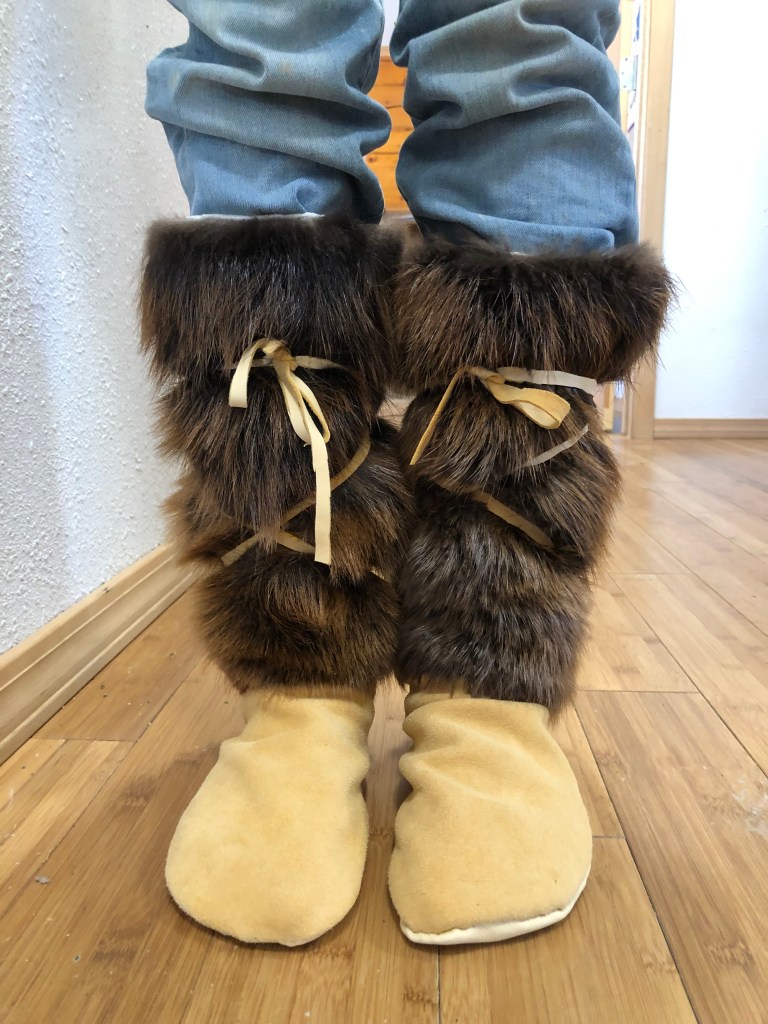
Noel enjoys fur sewing and has learned Native Alaska techniques while adding her own flare. Here she is wearing a pair of beaver moccasins with white-tailed deer buckskin she designed and crafted. Her grandpa hunts deer back east, saves the hides and gives them to us for fur sewing projects.

My son getting ready to fly his rubber band airplane he built in preparation for a competition.

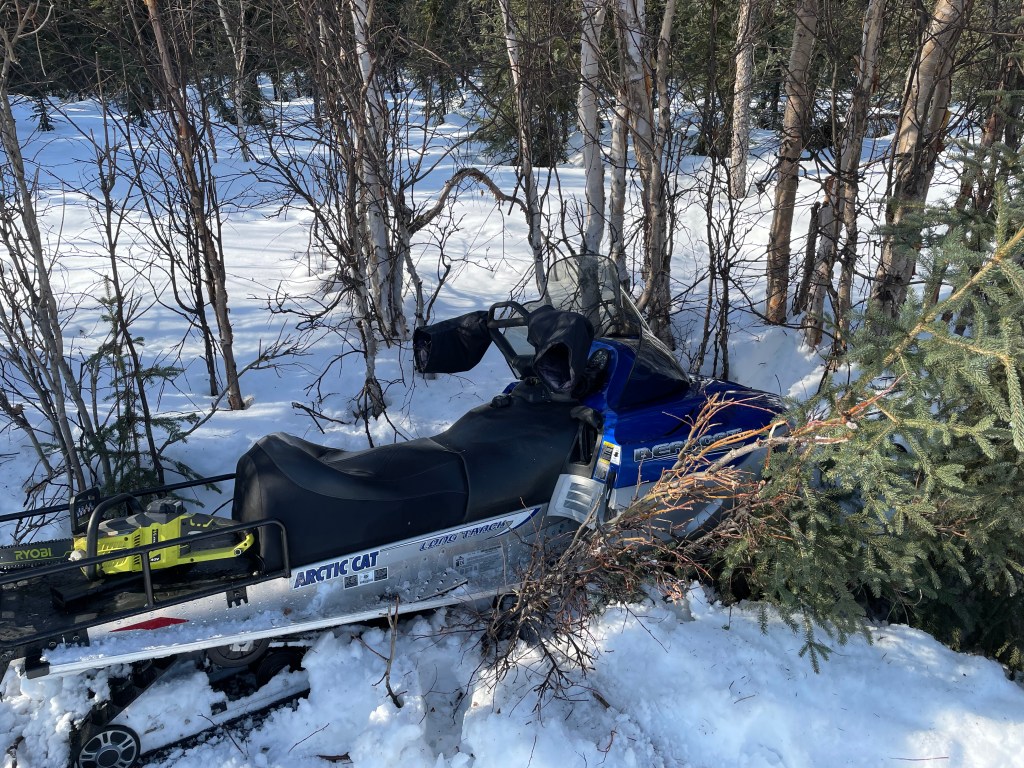
Learning the value of a good shovel, after accidentally ending up in the bushes while snowmobiling, is a lesson one never forgets. That’s a whole lot of digging, three feet down- in order to extract the machine.
Homeschooling tips from the Alaska Wilderness Mom
1. Keep it fun. Whatever curriculum you choose, make sure it’s fun. If it’s not, find a better system that works for your child and you. Tears are not good. Some are inevitable at times, but if too many arise, switch your program. Don’t be afraid to fork out some bucks and try new things.
2. Read aloud. If you are having a hectic day and cannot get to anything else, read aloud to your kids, and do it a lot. It is the thing you will remember the most fondly about your time with your kids. We are reading Jules Verne’s “Around the World in Eighty days” right now and are absolutely loving it! I feel like I’m traveling right along with Passepartout and Phileas Fogg!
3. Get outside and get into nature. I’m borrowing the Wild Kratt’s phrase here. In Alaska we have an outdoor classroom that is unparalleled. But wherever you live, whether it be the city, suburbia, or rural areas, find some green space and nature trails and go explore God’s natural world. Kids love, love, love nature. They can be free and wild, let them go be free and wild. They will come up with their own questions and you’ll find you’ll be the one learning too.
 Alaska Wilderness Mom